VO2 max: why aerobic fitness is one of the strongest predictors of a longer life
In large studies, low aerobic fitness predicts death at least as strongly as smoking or diabetes. Those links are observational, but trials show that VO2 max responds well to training.
The short version
5 key points- VO2 max is the most oxygen your body can take in and use during all-out exercise, usually given in millilitres per kilogram of body weight per minute (ml/kg/min).
- Among 122,007 adults who had treadmill tests, the least fit quarter had about five times the risk of dying during follow-up of the very fittest, after adjusting for other risk factors.
- Each 1-MET (3.5 ml/kg/min) higher level of fitness is linked to an 11–17% lower risk of death from any cause, according to a 2024 overview of meta-analyses.
- Smartwatch estimates can be close on average but about 10 ml/kg/min out or more for an individual; a lab test that analyses your breath is the most accurate method.
- VO2 max falls with age, by more than 20% per decade from your 70s, but training raises it: in one trial, 4x4-minute intervals lifted it by 7.2% in 8 weeks.
VO2 max is the maximum amount of oxygen your body can use during hard exercise, measured in millilitres per kilogram of body weight per minute. It is the standard measure of aerobic fitness, and large studies link a higher VO2 max to a substantially lower risk of death. Those studies cannot prove cause and effect, but trials show you can raise it with training.
What is VO2 max?
VO2 max is the standard measure of cardiorespiratory fitness: how well your heart, lungs, blood vessels and muscles work together to deliver and use oxygen during sustained exercise. It is usually expressed in ml/kg/min, or in METs, where 1 MET equals 3.5 ml/kg/min.
A 1-MET difference is easy to picture. A 2009 meta-analysis in JAMA noted that it corresponds to running or jogging about 1 km/h (0.6 mph) faster. Nearly half of the differences in fitness between people come down to genetics, according to a 2024 overview in the British Journal of Sports Medicine, with most of the rest shaped by how physically active they are.
Why is VO2 max linked to a longer life?
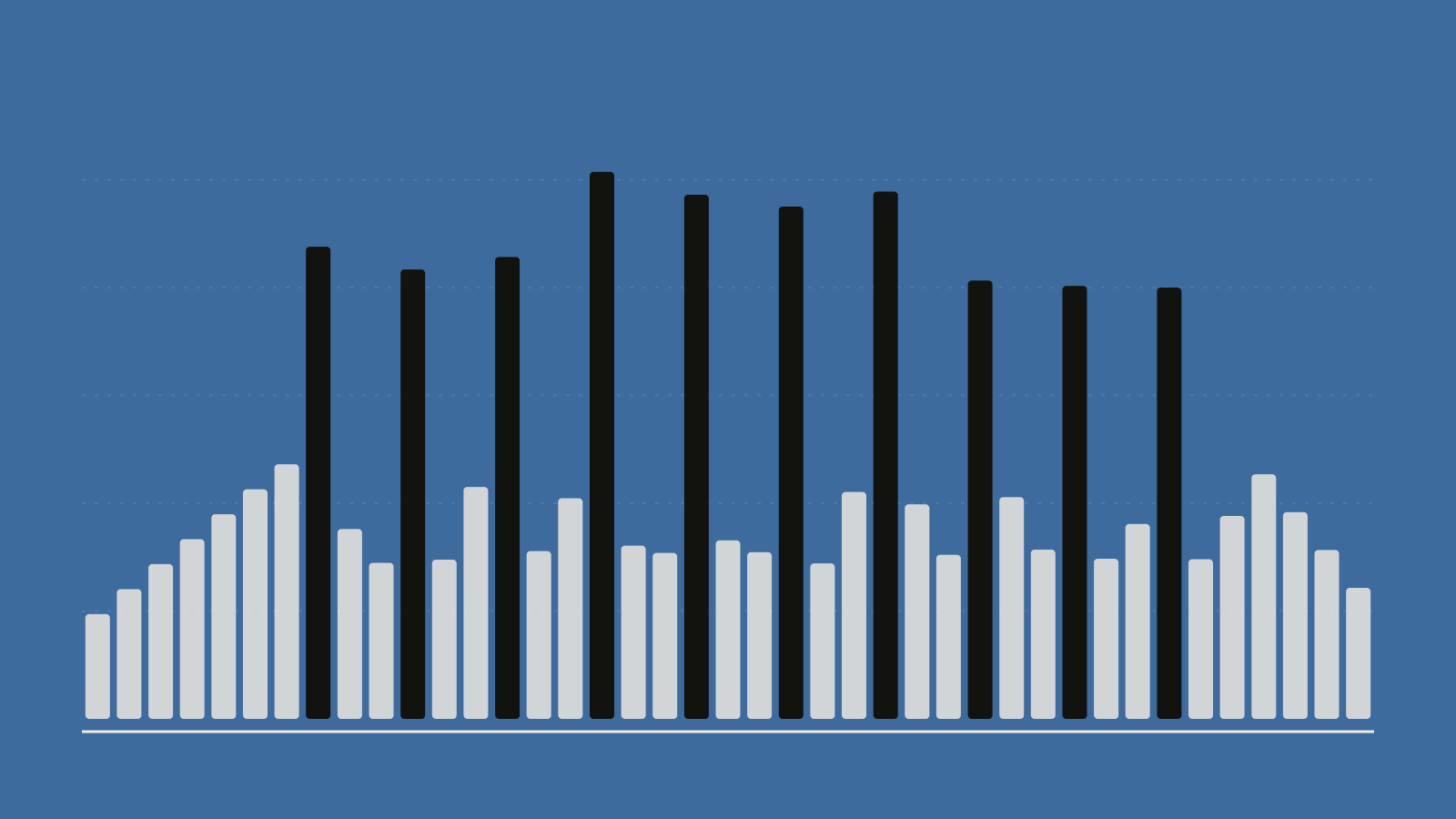
Across large studies, people with higher aerobic fitness die at lower rates, and the gap is as large as that for major risk factors such as smoking. The best-known study followed 122,007 adults who had treadmill tests at the Cleveland Clinic in Ohio, US, between 1991 and 2014, for a median of 8.4 years.
After adjusting for other risk factors, people in the least fit quarter for their age and sex had about five times the risk of dying during follow-up of the fittest 2.3%. Being below average rather than above average was linked to a 41% higher risk, similar to the extra risk linked to smoking (41%) or diabetes (40%) in the same patients. The researchers found no upper limit beyond which more fitness stopped being linked to lower risk.
5times
Source: Mandsager et al., JAMA Network Open, 2018
Pooled studies point the same way. The 2009 JAMA meta-analysis of 33 studies, including 102,980 people in its analysis of deaths, found that each 1-MET higher level of fitness was linked to a 13% lower risk of death from any cause and a 15% lower risk of coronary heart disease or cardiovascular events. The 2024 overview, which drew on 199 cohort studies and more than 20.9 million observations, found high fitness linked to a 53% lower risk of death from any cause than low fitness, and each extra MET to an 11–17% lower risk. It rated the certainty of this evidence as very low to moderate.
In 2016, the American Heart Association argued that fitness may predict death more strongly than established risk factors such as smoking, high blood pressure, high cholesterol and type 2 diabetes. It made the case for doctors to assess fitness in routine practice, as a “clinical vital sign”.
Does a higher VO2 max actually make you live longer?
Not proven. Almost all the evidence linking VO2 max to survival is observational, which shows association but not cause. The authors of the treadmill study acknowledged that they could not tell whether high fitness lowers the risk of death or simply picks out people who were healthier in the first place, and argued that a large randomised trial to settle the question would be impractical.
| Question | Best evidence | What it shows |
|---|---|---|
| Does a higher VO2 max predict a longer life? | Cohort studies and meta-analyses covering millions of people | A consistent, strong link, with certainty rated very low to moderate |
| Can training raise VO2 max? | Randomised controlled trials | Yes: in one trial, 4x4 intervals raised it by 7.2% in 8 weeks |
| Does exercise training lower the risk of death? | One large five-year trial in older adults | No clear difference compared with following national activity guidelines |
That last trial, Generation 100, randomly assigned 1,567 adults aged 70 to 77 in Trondheim, Norway, to two weekly sessions of high-intensity intervals at about 90% of peak heart rate, moderate continuous training at about 70%, or to follow national activity guidelines, for five years. Death rates did not differ between the combined exercise groups and the control group. The interval group had fewer deaths than the controls, but the difference was not statistically significant. Most participants were healthy and fairly active at the start, and the control group ended up exercising at an intensity between the two training groups, which blurred the comparison.
How is VO2 max measured, and how accurate is your smartwatch?
The most accurate method is a maximal exercise test on a treadmill or bike while a mask analyses the gases you breathe out. VO2 max can also be estimated from exercise tests without gas analysis, as in the Cleveland Clinic study, or from equations that need no exercise at all, which have reasonable validity.
Smartwatch estimates are improving but remain imprecise for individuals. A 2022 meta-analysis of 14 validation studies found that devices relying on information collected at rest overestimated VO2 max by about 2 ml/kg/min on average, with 95% of individual readings falling between about 13 ml/kg/min too low and 17 too high. Devices using data collected during exercise were close on average, but individual readings could still be about 10 ml/kg/min out in either direction. The authors concluded that these estimates work at population level but need to improve before they are used for individual sport or clinical decisions.
So treat your watch’s figure as a rough estimate, and pay more attention to how it changes over months than to any single reading.
How does VO2 max change with age?
VO2 max declines throughout adult life, and the decline speeds up with age. A study that tested 810 healthy adults aged 21 to 87 repeatedly over a median of 7.9 years found that VO2 max fell by 3–6% per decade in people’s 20s and 30s, but by more than 20% per decade in their 70s and beyond. From the 40s onwards, the decline was faster in men than in women.
The decline was similar regardless of how active people said they were. The authors warned that this accelerating loss has substantial implications for older people’s independence and quality of life.
How can you improve your VO2 max?
Both easy aerobic exercise and harder intervals can raise VO2 max, and a sensible weekly plan uses both. For people who are sedentary or unfit, around 150 minutes a week of brisk walking can produce large relative improvements, according to the 2024 overview. Our guide to Zone 2 training explains how to build that easy aerobic base.
Intervals add a stronger stimulus. In a 2007 trial, 40 healthy, moderately trained men did 4x4 intervals 3 days a week for 8 weeks: 4 minutes at 90–95% of maximum heart rate, each followed by 3 minutes of active recovery at about 70%. Their VO2 max rose by 7.2%, from 55.5 to 60.4 ml/kg/min. Steady running at 70% or 85% of maximum heart rate, matched for total work, did not improve VO2 max as much. Our comparison of HIIT and steady-state cardio covers the trade-offs.
- Build a base first. Aim for about 150 minutes a week of brisk walking, easy cycling or similar activity for several weeks.
- Find your heart rate targets. Use our heart rate zones tool to estimate 70% and 90–95% of your maximum heart rate.
- Add one 4x4 session a week. Warm up for 10 minutes, then do four 4-minute efforts at 90–95% of maximum heart rate with 3 minutes of easy movement between them, and cool down.
- Keep most training easy. Hard intervals work best on top of regular easy sessions, not instead of them.
- Retest every few months. Use the same watch, test or route each time so that you compare like with like.
Your questions answered
What is a good VO2 max?
It depends on your age and sex, so compare yourself with people like you rather than with athletes. As a broad marker, a 2009 meta-analysis found that people with a fitness level below about 7.9 METs, roughly 28 ml/kg/min, had substantially higher rates of death and heart disease than those above it.
Can you improve VO2 max if you have a long-term health condition?
Usually, yes. A 2024 overview in the British Journal of Sports Medicine noted that even people with severe chronic disease can improve their cardiorespiratory fitness through well-planned aerobic exercise programmes. Ask a doctor or your care team which type and intensity of exercise is safe for you.
How often should I do 4x4 intervals?
Trials have used 2 or 3 sessions a week: 3 a week in the original study of fit men, and 2 a week in a large trial of older adults. If you are new to hard intervals, 1 session a week alongside easier training is a sensible start.
Do I need a lab test to know my VO2 max?
Not for most purposes. A lab test with breath analysis is the most accurate option, but exercise tests without gas analysis and equations that do not need exercise at all can give reasonable estimates. A consistent estimate that you can repeat over time is often enough to track progress.
Sources and further reading
- Association of cardiorespiratory fitness with long-term mortality among adults undergoing exercise treadmill testing JAMA Network Open, 2018
- Cardiorespiratory fitness as a quantitative predictor of all-cause mortality and cardiovascular events in healthy men and women: a meta-analysis JAMA, 2009
- Importance of assessing cardiorespiratory fitness in clinical practice: a case for fitness as a clinical vital sign: a scientific statement from the American Heart Association Circulation, 2016
- Cardiorespiratory fitness is a strong and consistent predictor of morbidity and mortality among adults: an overview of meta-analyses representing over 20.9 million observations from 199 unique cohort studies British Journal of Sports Medicine, 2024
- Effect of exercise training for five years on all cause mortality in older adults: the Generation 100 study: randomised controlled trial BMJ, 2020
- Aerobic high-intensity intervals improve VO2max more than moderate training Medicine and Science in Sports and Exercise, 2007
- Validity of estimating the maximal oxygen consumption by consumer wearables: a systematic review with meta-analysis and expert statement of the INTERLIVE network Sports Medicine, 2022
- Accelerated longitudinal decline of aerobic capacity in healthy older adults Circulation, 2005